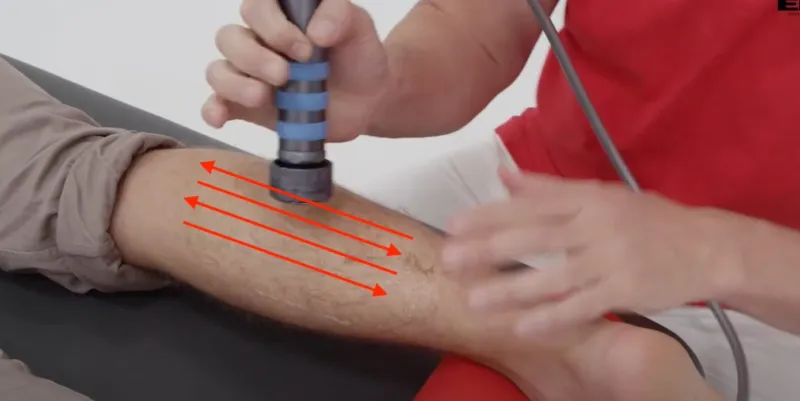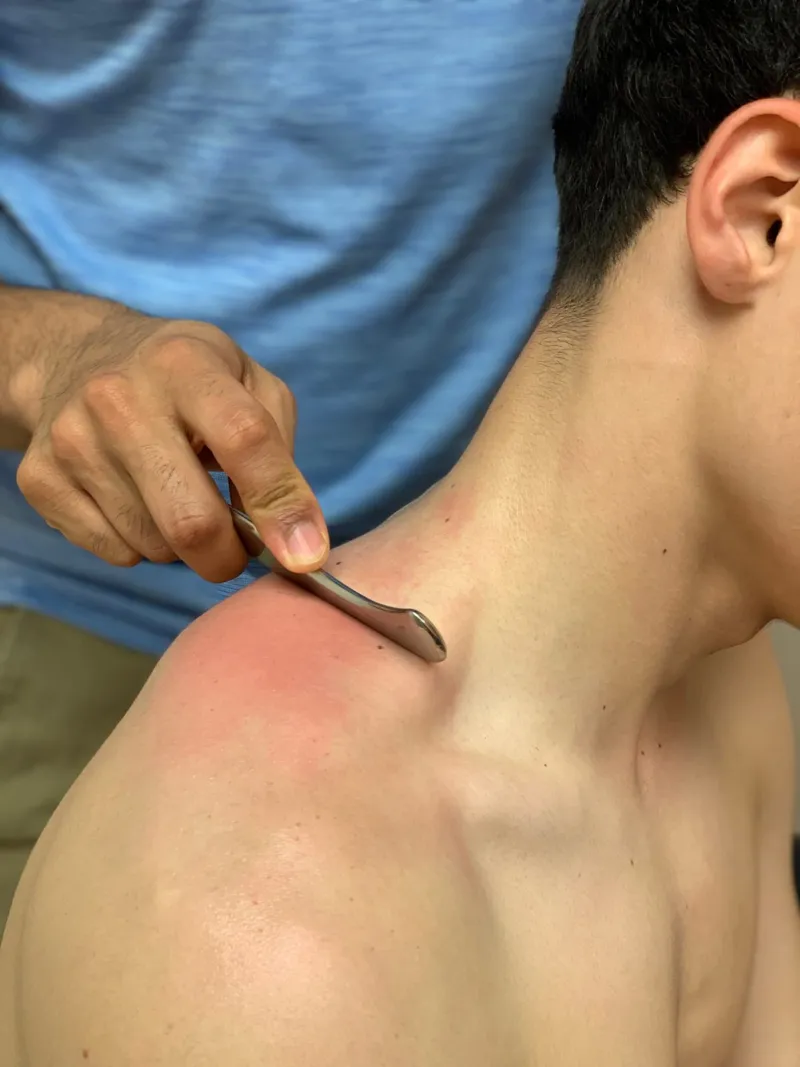
- Works on the fascia with pressure (IASTM) or negative pressure (cupping).
- Eases compression between fascial layers and acts on adhesions.
- Helps reduce trigger points and relax tight muscles.
- You will feel pressure, sometimes a little pain at the trigger point.
What is fascia?
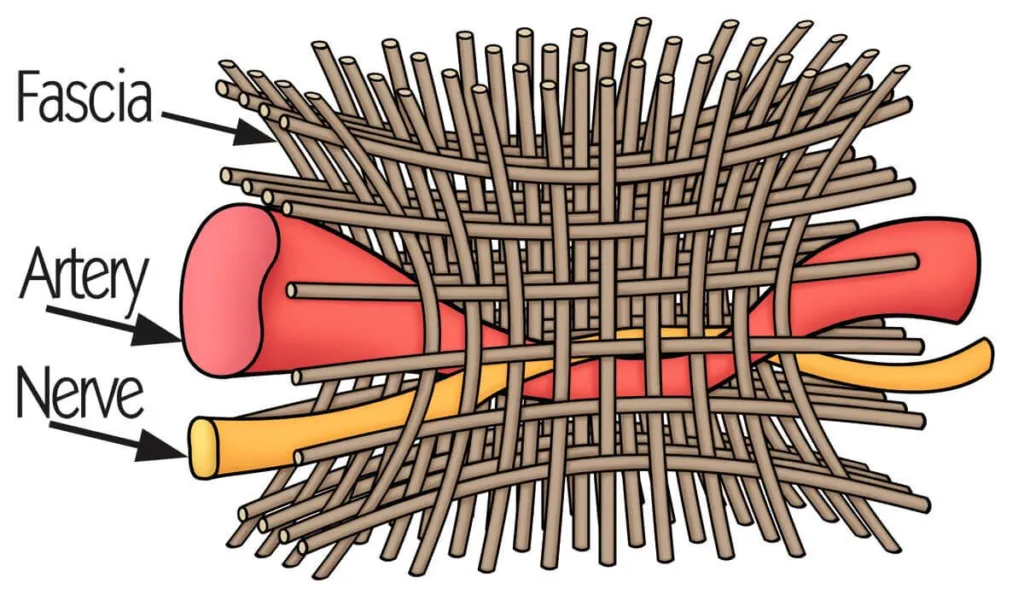
Fascia is the layers of connective tissue under the skin that wrap around muscles, blood vessels and nerves. After an injury, fascia can change, stick together or form scar tissue.
How does myofascial release work?
Myofascial release applies pressure or negative pressure to the tissue to ease compression between fascial layers and act on adhesions. The aim is to improve mobility and circulation between tissue layers, helping to reduce trigger points and relax tight muscles.
At True Core Wellness, myofascial release is done with two techniques: IASTM and cupping.
IASTM: instrument-assisted soft tissue mobilisation
IASTM (Instrument-Assisted Soft Tissue Mobilization) uses a specialised smooth-edged instrument that glides over the skin to work on the soft tissue underneath.
- The skin is cleaned and a thin layer of cream is applied so the instrument glides smoothly.
- The therapist first glides the instrument lightly in several directions to find areas of tissue that feel gritty, tight or resistant.
- The therapist then focuses on those areas with light to moderate pressure, using long strokes over larger areas of fascia.
- At the end, the therapist checks whether the tissue now glides more easily and feels less restricted.
Cupping
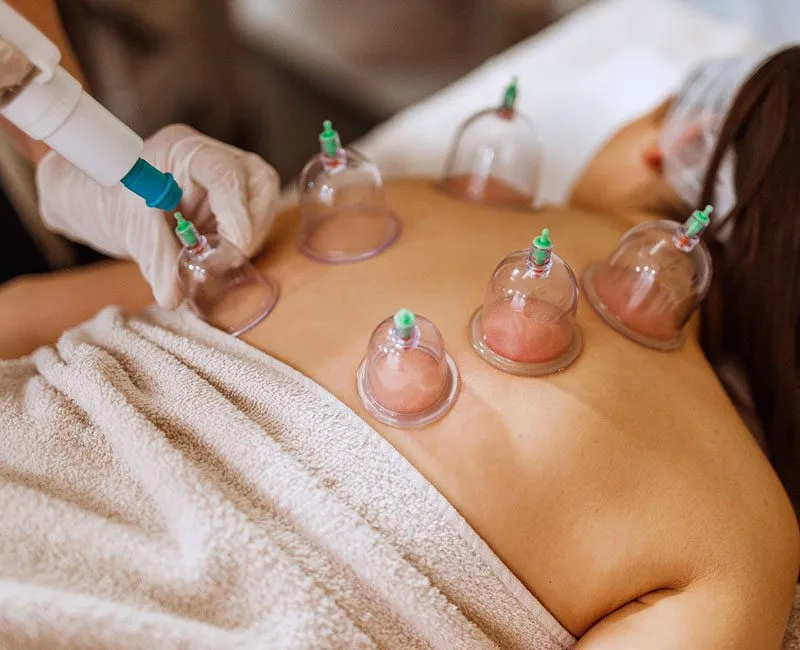
Cupping uses cups that create suction (negative pressure) to gently lift the skin and the tissue underneath.
- The skin is cleaned and a layer of cream or oil is applied so the cups slide easily.
- The therapist slides the cups over the treatment area, paying attention to tight spots (dynamic cupping).
- Over the main trigger point, a cup is left in place for about 5–10 minutes (static cupping).
What will you feel?
You will feel pressure, and sometimes a little pain at the trigger point. Let the therapist know so the pressure can be adjusted when needed.
Benefits
- Reduces muscle tension and trigger points.
- Improves circulation in the treated area.
- Eases pain and stiffness.
- Supports recovery after treatment.
- Improves tissue mobility.
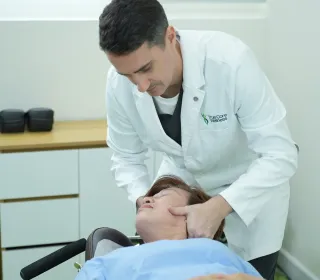 Related serviceBack & neck painTreatment for pain from posture, desk work and degeneration.
Conditions it may be used for
- Tight, stiff muscles.
- Trigger points.
- Myofascial restrictions.
- Back, neck and shoulder pain.
- Posture-related muscle tension.
- Recovery after training or rehabilitation.

Medical Director of True Core Wellness Chiropractic Clinic. Updated 11/2026. View profile
This page is for general information and does not replace an individual medical examination.
Treatments and settings are prescribed by a doctor after an examination, and results differ from person to person. This page is for general information.