Whether you run, play football or have taken up pickleball, an injury can stop your training overnight. At True Core Wellness in District 7, we help athletes of all levels recover from sports injuries (chấn thương thể thao) and get back to the activities they enjoy, with a clear plan from the first visit to the return to play.
Go to a hospital emergency department straight away if you have:
- A visible deformity, or a suspected broken bone (gãy xương) or dislocation (trật khớp)
- Inability to bear any weight on the injured leg
- A head injury with confusion, vomiting or loss of consciousness
- Numbness, tingling or weakness spreading into an arm or leg after a neck or back injury
Care Led by a Certified Chiropractic Sports Physician
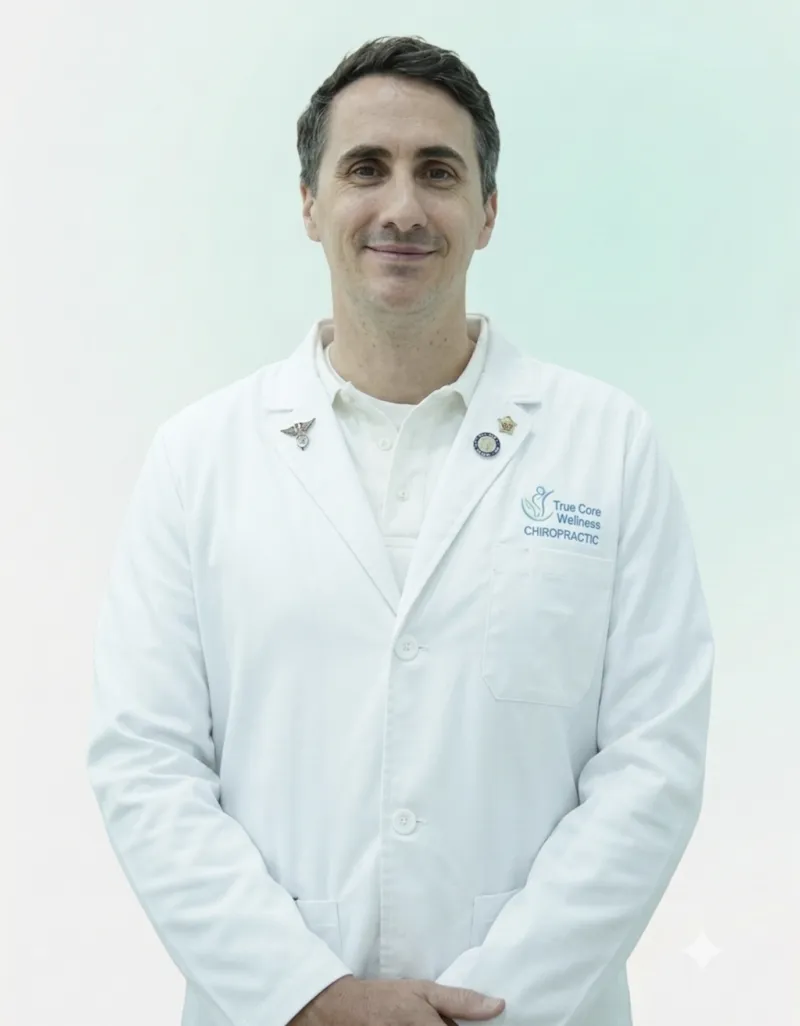
Sports injury care at our clinic is led by Dr. Jesse Politowski, a Certified Chiropractic Sports Physician (CCSP). The CCSP is a postgraduate sports medicine certification for chiropractors, covering the assessment, treatment and rehabilitation of athletic injuries. Dr. Politowski also holds a master's degree in Sports Science and Rehabilitation and has served as team doctor for college athletics programs in the United States.
Acute Injuries vs Overuse Injuries
Acute injuries happen suddenly, such as rolling an ankle, pulling a hamstring while sprinting, or twisting a knee. Most of the athletes we see come in with an acute injury, usually a sprain (bong gân) of a ligament or a strain (căng cơ) of a muscle or tendon.
These injuries are graded by severity:
- Grade 1: a mild stretch with small tears, mild pain and little loss of function
- Grade 2: a partial tear with more pain, swelling and weakness
- Grade 3: a complete tear, often with significant swelling and instability
Overuse injuries build up gradually from repeated stress without enough recovery. Common examples are tendinitis (viêm gân), shin splints and plantar fasciitis (viêm cân gan chân). They often start as mild pain after training that slowly gets worse.
Common Sports Injuries We Treat
Most of our sports patients come from running, football and pickleball. Common injuries include:
- Ankle sprains (bong gân cổ chân)
- Hamstring, calf and groin strains
- Knee injuries, including ligament sprains and patellar tendinitis
- Achilles tendinitis (viêm gân Achilles) and plantar fasciitis
- Shoulder and elbow pain from overhead and racquet sports (chấn thương vai)
- Low back pain related to training
What to Do in the First Few Days After an Injury
Every injury is different, so there is no single rule for every case. In general, the first steps are to:
- Modify your activity and avoid movements that clearly increase the pain
- Use ice for short periods if the area is swollen and painful
- Rest the injured area when needed, without becoming completely inactive
- Use compression, such as an elastic bandage, to help control swelling
An early assessment helps you know which of these steps fit your injury, and how soon you can start moving again.
Your First Visit: Consultation and Examination
Your first visit starts with a one-to-one consultation. The doctor listens first, then asks how the injury happened, what your sport and training load look like, and what you want to get back to.
Next is a thorough examination of the injured area and of how your whole body moves. It includes:
- Orthopedic testing to identify the injured structure and grade the injury
- Movement screens and functional movement screens
- Strength checks to compare the injured side with the healthy side
- AI-assisted gait analysis and a flat foot check, especially for runners and lower-limb injuries
This shows us what is injured, why it may have happened, and how to plan your recovery. Depending on the findings, treatment may begin on the same day.
Do I Need an X-Ray or MRI?
If you already have an X-ray or MRI, please bring it. If not, please do not book a scan on your own first. Without an examination it is easy to image the wrong area or choose the wrong test. When imaging is needed, such as an MRI for a suspected Grade 3 tear, the doctor will refer you.
Sports Injury Treatment at True Core Wellness
Treatment combines several approaches, chosen for your injury and your sport:
- Chiropractic care (nắn chỉnh) to restore movement in stiff joints that may affect how you move and load the injured area
- Soft tissue therapy to ease tight and overworked muscles
- Physiotherapy (vật lý trị liệu), including laser therapy and shockwave therapy, used to help calm pain and support tissue recovery
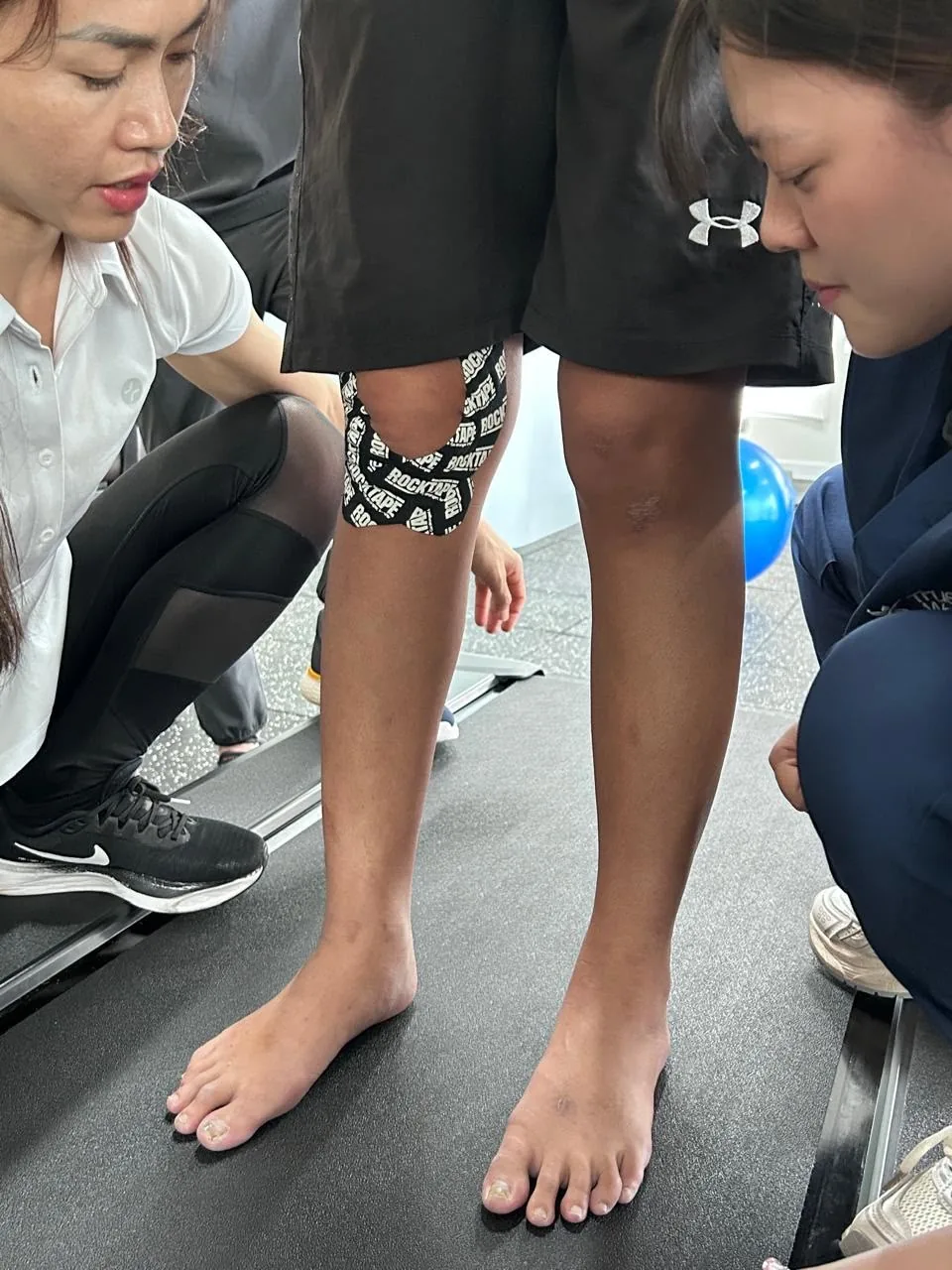
- Sports taping to support the injured area as you return to activity
From Rehab to Sport-Specific Training
As pain settles, the focus moves to rehab exercises (phục hồi chức năng sau chấn thương) that rebuild strength, mobility and control. The final stage is sport-specific training: movements that match what your sport demands, such as cutting and sprinting for football, or lateral movement and quick reactions for pickleball.
When Can I Return to Sport?
We clear you to return to sport (quay lại tập luyện) when two things are true: your condition has improved, and you pass functional screening tests that check strength, balance and movement quality. Returning on clear criteria, rather than on a date alone, helps reduce the risk of the same injury happening again.
What Does a Typical Care Plan Look Like?
A typical plan is 3 to 4 visits per week for 12 visits, followed by a reassessment. More severe injuries, such as Grade 2 and 3 tears, may need a longer plan.
When We Refer You to a Specialist
If progress is limited after several visits, or the examination or imaging shows a severe injury, we refer you for further assessment, injections such as PRP, or a surgical consultation within our network of trusted hospitals.
Reducing Your Risk of Sports Injury
- Warm up properly before training and matches (khởi động)
- Increase training volume and intensity gradually
- Build strength in the hips, core and legs, not just sport skills
- Wear footwear suited to your sport and your foot type
- Allow enough recovery and sleep between hard sessions