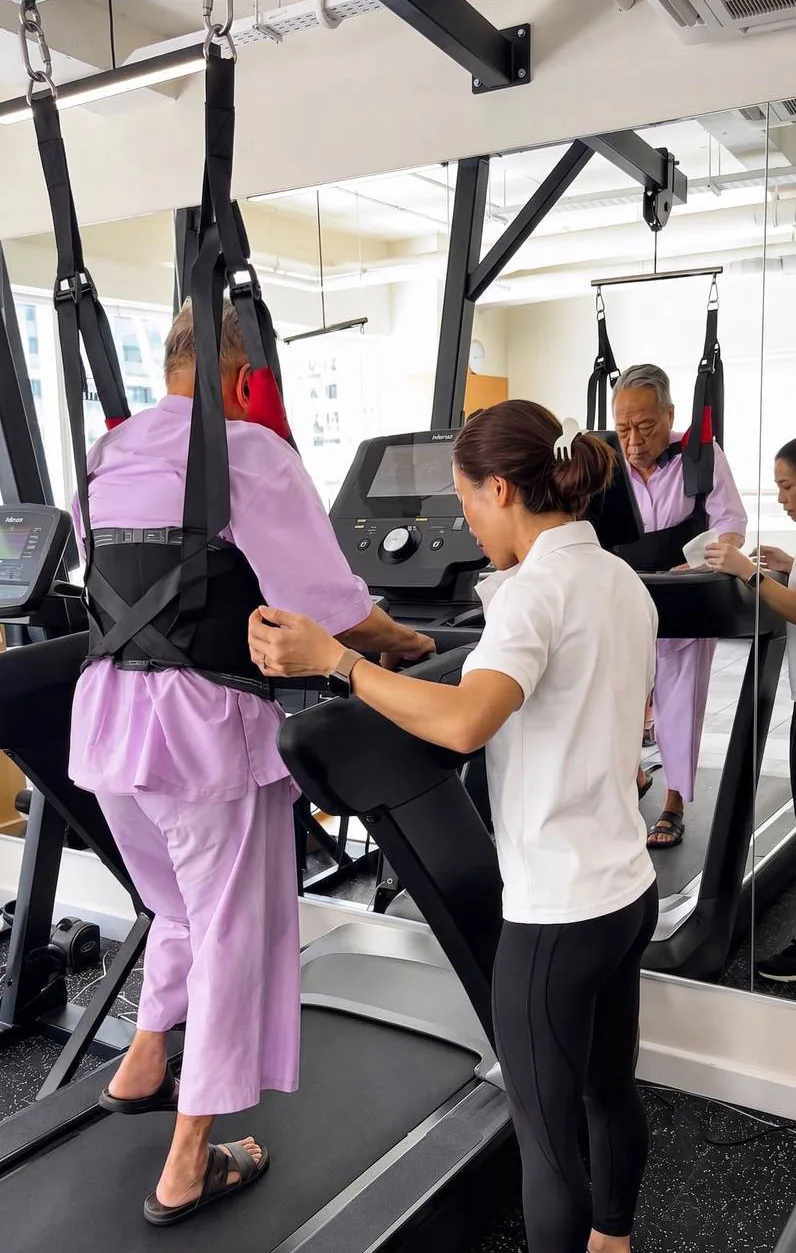

Often it is a family member who notices first. A parent who is walking more slowly, holding onto furniture, avoiding stairs, or who has already had a fall. These changes are common with age, but they are not something to simply accept.
Call 115 or go to a hospital straight away if, after a fall, the person:
- Hit their head, especially if they take blood thinners, or becomes confused, drowsy or vomits
- Cannot stand or put weight on a leg, or has severe hip or groin pain (a possible hip fracture)
- Has a visibly deformed arm, wrist or leg
- Fell because of sudden weakness, chest pain, dizziness or fainting
At True Core Wellness in District 7, we help older adults (người cao tuổi) lower their risk of falling and keep their mobility and strength, so they can stay active and independent at home for longer. Most of the people we see in this program are over 70, and some of our patients are 96 and even 100 years old.
Why Falls Happen in Older Adults
Falls (té ngã) are rarely caused by one thing. Common contributors include:
- Loss of leg and hip strength, which makes standing up and recovering balance harder
- Slower reactions and reduced balance (mất thăng bằng)
- Changes in walking, such as shorter or shuffling steps
- Stiff joints and reduced flexibility
- Foot problems or unsupportive footwear
- Hazards at home, such as slippery bathroom floors, loose rugs or poor lighting
- Some medications, or changes in vision
Signs Families Should Watch For
- Walking more slowly, or less steadily than before
- Holding onto walls or furniture while moving around the house
- Difficulty standing up from a chair without using the arms
- Avoiding stairs, outings or activities they used to enjoy
- A recent fall or near-fall, even without injury
- A new fear of falling
One fall is a strong signal that another may follow. It is the right time to get an assessment, not something to wait on.
Why Strength and Mobility Matter
Muscle strength and balance naturally decline with age, but they can still be trained in later life. Stronger legs, better balance and more confident walking are the foundation of staying independent, from getting out of bed to walking to the market.
Your First Visit: Consultation and Fall-Risk Assessment
The first visit starts with a one-to-one consultation with the doctor, and family members are encouraged to attend. We ask about any falls or near-falls, changes the family has noticed, current health conditions and medications, and the daily activities that matter most.
Next is a thorough assessment that includes:
- A fall-risk screen
- Balance testing
- Gait analysis to see how the person walks, turns and uses any walking aid
- Strength checks of the legs, hips and core
These results show where the greatest risks are and become the baseline we use to measure progress.
Mobility and Strength Rehabilitation at True Core Wellness
Each program is built around the assessment and the person's goals. It may include:
- Rehabilitation on the True Core Rehab System, our dedicated rehab equipment, focusing on balance, walking, strength and coordination, with vibration training to stimulate the muscles and nervous system
- Chiropractic care (nắn chỉnh cột sống) to improve spinal joint mobility and reduce stiffness, using gentle, low-force techniques suited to older adults
- Fall-prevention practice, such as standing up safely, turning, stepping over obstacles and recovering balance
- Walking aid training, so a cane or walker is used correctly and with confidence
- Custom orthotics, when foot problems affect balance or walking
- Home safety advice for the family, covering practical changes such as bathroom grab bars, non-slip mats, lighting and clearing walkways
A Long-Term Plan for Staying Independent
Strength and balance need regular practice to build and to keep. A typical plan is 3 visits per week over the long term, with progress checked regularly. Once the person reaches their goals, care moves to maintenance visits to help hold on to the strength and mobility they have gained. The expected length of care and the full cost are explained before care begins.
Simple Ways to Reduce Fall Risk at Home
- Keep floors clear of clutter, cords and loose rugs
- Add grab bars and non-slip mats in the bathroom
- Use night lights between the bedroom and bathroom
- Wear well-fitting shoes with good grip, rather than loose slippers
- Stand up slowly, especially after sitting or lying down for a long time
- Stay active every day, even with short walks