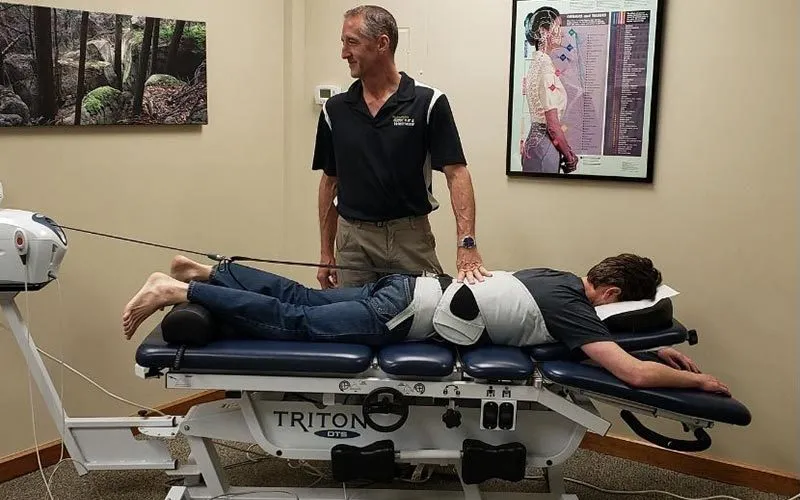
- A gentle, controlled pull on a dedicated table and traction system.
- Mainly treats the lower back and the neck.
- Helps fluid exchange in the discs and eases pressure on the nerves.
- You only feel a light pull, not a strong one.
How it works
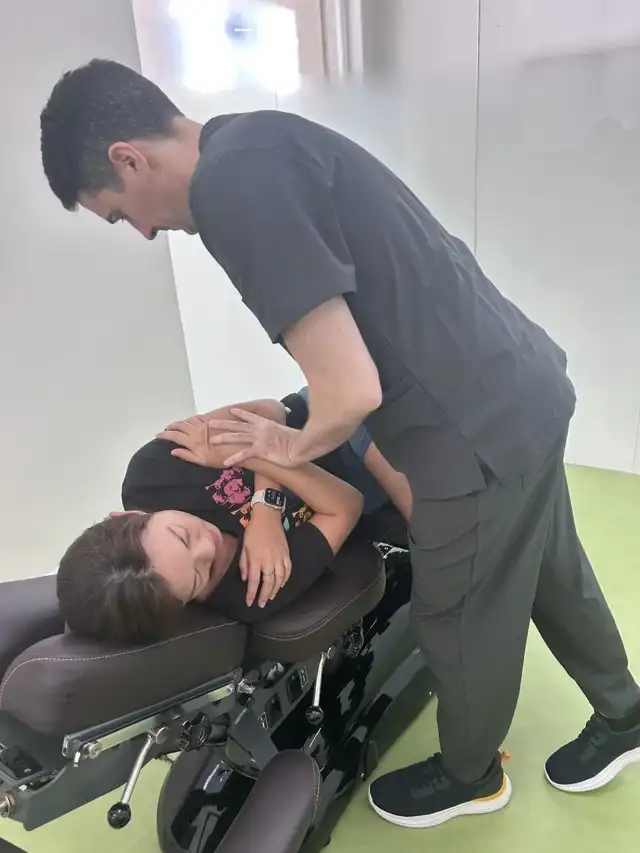
Spinal decompression uses a treatment table and a traction system to gently stretch the spine. It mainly treats the lumbar spine (lower back) and the cervical spine (neck).
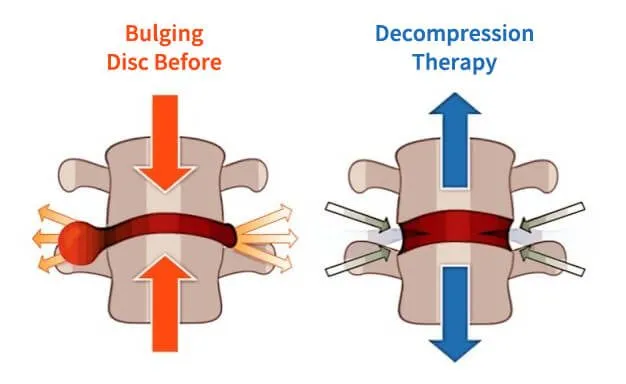
The treatment uses a light pulling force to create more space around the nerves and a pumping effect on the discs, which helps fluid exchange and eases pressure on the nerves.
What will you feel?
During the session you will feel a light pull, not a strong one. Tell the therapist straight away if anything feels uncomfortable so it can be adjusted.
Benefits
- Eases pressure on the tissues around the spine.
- Creates a pumping effect that helps fluid exchange in the discs.
- Helps ease pressure on the discs and spinal nerve roots.
 Related serviceBack & neck painTreatment for pain from posture, desk work and degeneration.
Conditions it may be used for
- Bulging or herniated discs.
- Spinal stenosis.
- Spinal degeneration.
- Nerve root conditions (radiculopathy).
A doctor examines you first to decide whether spinal decompression suits your condition; it is usually combined with rehabilitation exercises.

Medical Director of True Core Wellness Chiropractic Clinic. Updated 11/2026. View profile
This page is for general information and does not replace an individual medical examination.
Treatments and settings are prescribed by a doctor after an examination, and results differ from person to person. This page is for general information.