Seek medical care quickly if your knee:
- Is hot, red and swollen, especially with a fever
- Swells quickly after an injury, or gives way when you put weight on it
- Locks and will not straighten fully
- Cannot bear any weight at all
Why Knee Pain Is Often Not Just a Knee Problem
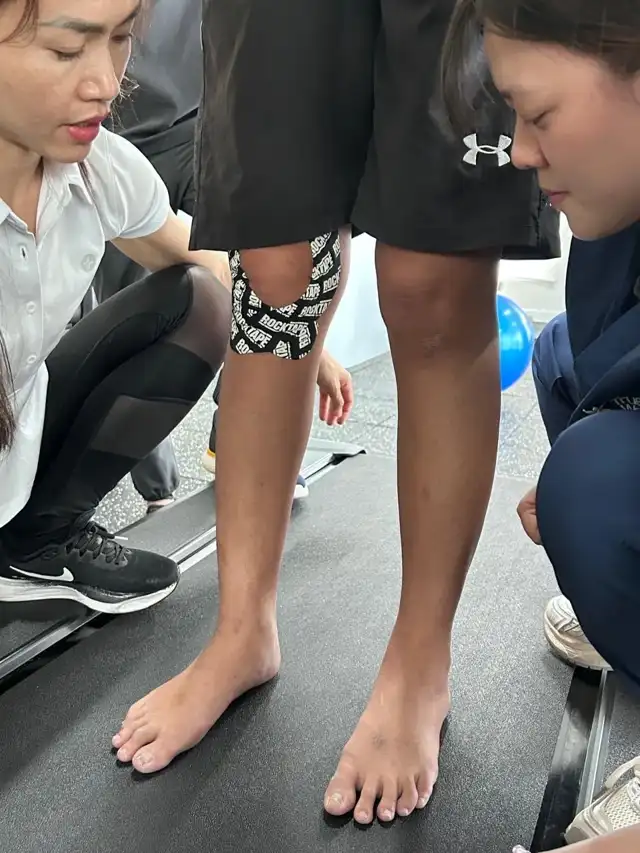
The knee sits between the hip and the foot, so it absorbs stress from both. Flat feet, a foot that rolls inward (overpronation), a stiff ankle or a weak hip can change how the knee moves with every step. Over years, that extra load can contribute to pain and wear. This is why we examine the whole leg, not only the knee.
Common Causes of Knee Pain
Knee osteoarthritis (thoái hóa khớp gối) is the most common cause we see. The cartilage that cushions the joint gradually wears down. It often begins in a person's 40s and is frequently linked to how they have walked over a lifetime, such as long-term overpronation. Middle-aged and older women are the group we see most often with this condition.
Patellar tendinitis (viêm gân bánh chè) is the second most common, especially in athletes and runners. Repeated running and jumping irritates the tendon around the kneecap.
Ligament injuries and rehab after knee surgery are the third group. These include sprains or tears of the ACL (đứt dây chằng chéo trước) and other knee ligaments, as well as recovery after procedures such as ligament reconstruction or meniscus repair (rách sụn chêm).
Symptoms of Knee Pain
People with knee osteoarthritis usually describe:
- Pain and stiffness, especially in the morning or after sitting
- Pain going up and down stairs (đau đầu gối khi leo cầu thang)
- Pain when squatting or kneeling
- Reduced range of motion and difficulty walking longer distances
- A grinding or crunching feeling in the joint (khớp gối kêu lạo xạo)
People with patellar tendinitis usually feel pain at the tendon just below or around the kneecap, often after running, jumping or training.
Your First Visit: Consultation and Examination
Your first visit starts with a one-to-one consultation. The doctor listens first, then asks how the pain started, what makes it worse, and what activities you want to get back to.
Next is a thorough examination that goes beyond the knee itself. It includes:
- Orthopedic testing of the knee joint, ligaments, meniscus and kneecap
- Checks of the hips, ankles and feet, which often play a role in knee pain
- AI-assisted gait analysis to see how you walk
- A podoscope check of your foot arches for flat feet or overpronation
Together, these show us where the pain comes from and whether non-surgical care is a good fit. Depending on the findings, treatment may begin on the same day.
Do I Need an X-Ray or MRI?
If you already have an X-ray or MRI of your knee, please bring it. If not, please do not book a scan on your own first. Without an examination it is easy to image the wrong area or choose the wrong test. When imaging is needed, the doctor will refer you.
Non-Surgical Treatment for Knee Pain at True Core Wellness
The doctor combines treatments based on your condition and examination findings. These may include:
- Physiotherapy (vật lý trị liệu), including shockwave therapy and laser therapy, used to help calm pain and support tissue recovery, particularly for tendon problems
- Soft tissue work such as instrument-assisted soft tissue mobilization (IASTM) and cupping, to ease tight muscles around the knee, thigh and calf
- Rehab exercises to build strength and control in the hips, thighs and knees, and to restore comfortable movement
Custom Orthotics for Gait Problems
When flat feet or overpronation affect how your knee moves, the doctor may prescribe custom orthotics. By improving how your foot supports each step, orthotics can reduce the stress that reaches the knee and help decrease knee pain.
What Does a Typical Care Plan Look Like?
A typical plan is 3 to 4 visits per week for 12 visits, followed by a reassessment. People with more severe arthritis may need a longer plan or ongoing maintenance care to stay active and comfortable.
When We Refer You to a Specialist
If progress is limited after several visits, we may refer you for platelet-rich plasma (PRP) injections, a common next step for knee pain. If the examination or imaging shows severe damage, we refer you for a surgical consultation. Referrals go to our network of trusted hospitals.
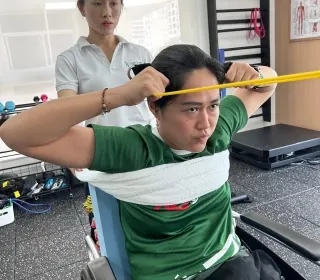 Related servicePhysiotherapy & rehabilitationTherapeutic exercise and equipment on a personal plan.
Protecting Your Knees
- Keep your thigh and hip muscles strong with regular exercise
- Wear supportive shoes, especially if you have flat feet
- Increase running or training volume gradually
- Maintain a healthy body weight to reduce load on the joint

Medical Director of True Core Wellness Chiropractic Clinic. Updated 10/2026. View profile
This page is for general information and does not replace an individual medical examination.