What Is Scoliosis?
A healthy spine looks straight when viewed from behind. With scoliosis, it curves to the side and the vertebrae also rotate. A curve of 10 degrees or more on X-ray, measured as the Cobb angle (góc Cobb), is defined as scoliosis. A single curve is often called a C-curve (vẹo cột sống chữ C), and a double curve an S-curve (vẹo cột sống chữ S).
Types of Scoliosis
- Idiopathic scoliosis (vẹo cột sống vô căn): the most common type, with no single known cause. It usually appears in children and teenagers during growth.
- Congenital scoliosis (cong vẹo cột sống bẩm sinh): caused by vertebrae that formed differently before birth.
- Neuromuscular scoliosis: linked to conditions that affect nerves and muscles, such as cerebral palsy.
- Adult degenerative scoliosis: develops later in life as discs and joints wear unevenly.
Signs of Scoliosis in Children and Teenagers
Scoliosis in children is usually painless, so it is often found by chance. Look for:
- One shoulder higher than the other
- One shoulder blade that sticks out more
- An uneven waistline or one hip higher
- A rib or back hump on one side when your child bends forward
- Clothes that hang unevenly, or the body leaning to one side
Signs of Scoliosis in Adults
- Back pain or stiffness, often around the curve
- Muscle fatigue after standing or walking
- Pain, numbness or heaviness in the legs if a nerve is crowded
- Changes in posture or height over time
When to Check: Growth Is the Key Period
Idiopathic scoliosis most often appears between ages 10 and 15, during growth spurts, and curves in girls are more likely to progress. A curve has the greatest chance of increasing while the spine is still growing. If you notice any of the signs above, an early examination gives you the clearest picture and the most options.
Your First Visit: Consultation and Examination
Your first visit starts with a one-to-one consultation. The doctor listens first, then asks when the curve was noticed, about any pain or symptoms, and what your goals are. For children, we welcome both parents to attend.
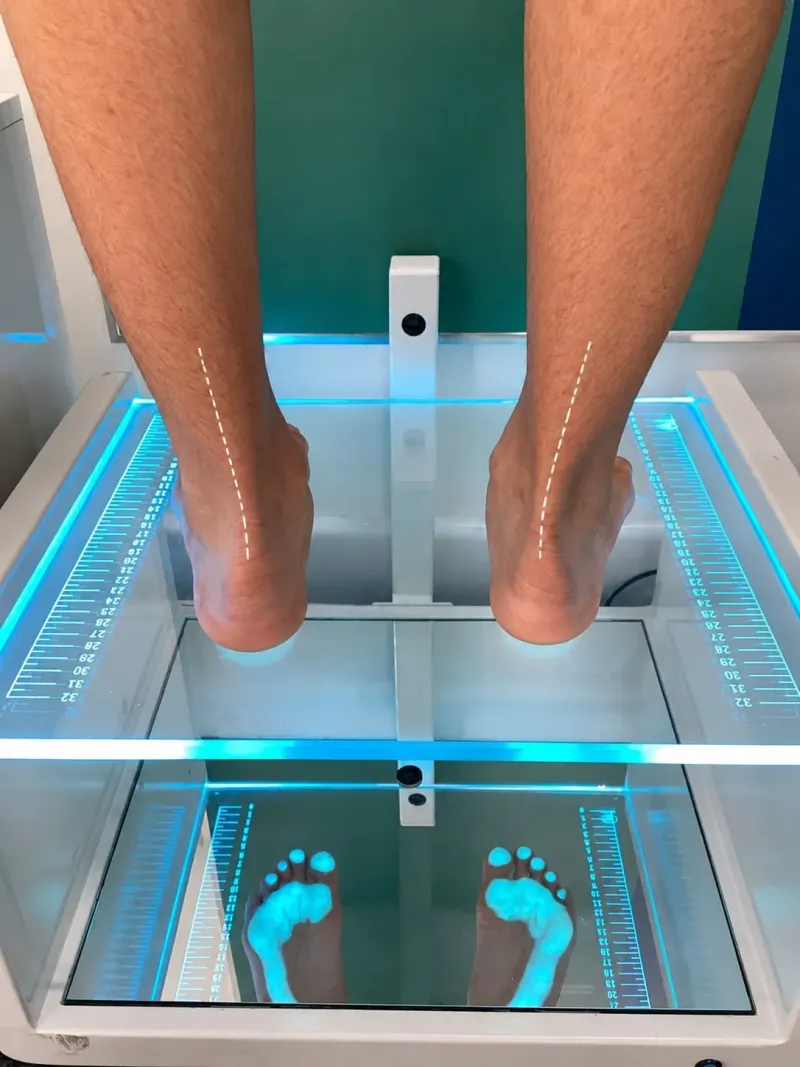
Next is a thorough examination that includes AI-assisted posture analysis, the forward bend test (Adam's test) with a scoliometer to measure trunk rotation, leg length and flat foot checks, and orthopedic and neurological testing. It shows us:
- Where the curve is and how it affects posture and movement
- Whether any nerves are involved
- Whether non-surgical care is a good fit, or a specialist referral is needed
X-Rays and Monitoring
An X-ray is essential for scoliosis. It measures the Cobb angle and, in children, helps estimate how much growth remains. If you already have X-rays, please bring them. If not, please do not book one on your own; the doctor will refer you for the correct full-spine views.
For a growing spine, X-rays early in care are part of responsible monitoring, because they show whether a curve is stable or changing. A typical schedule is an initial X-ray, then follow-up X-rays at 3 months and 6 months. If there is no progression, X-rays can then move to once a year, depending on the child's age.
Non-Surgical Scoliosis Care at True Core Wellness
Our scoliosis care combines three parts, adjusted to each patient's curve and examination:
- Chiropractic care (nắn chỉnh cột sống) to improve movement in stiff areas of the spine.
- Physiotherapy (vật lý trị liệu) to support the muscles and soft tissues around the curve.
- Scoliosis-specific exercises, practised in the clinic and continued at home with a written exercise program.
Scoliosis Care for Children: A Structured Program
For a growing spine, care is a long-term commitment, usually a year or more. The first phase is the most important: visits are frequent and intensive until follow-up X-rays show the curve has stabilized or improved. A typical program looks like this:
- Intensive phase: 3 visits per week for the first 1 to 3 months, followed by an X-ray
- Once the curve is stable or improving: visits reduce step by step, typically to 2 per week and then 1 per week
- Ongoing monitoring: regular X-rays until growth is complete
Before care begins, we explain the expected duration and total cost in full, so parents can decide with complete information.
We also talk openly about risk. A curve's chance of progressing depends on its size and how much growth remains. We explain these factors plainly, without exaggeration, alongside the plan.
Scoliosis Care for Adults
Adults are at lower risk of severe progression than growing children, so adult care focuses on relieving symptoms and improving function, much like care for neck or back pain. A typical plan is 3 to 4 visits per week for 12 visits, followed by a reassessment. Because scoliosis is lifelong, maintenance care is an important part of keeping you comfortable and moving well. Care does not aim to straighten an adult curve, and we do not claim that it can.
 Related servicePosture, flat feet & scoliosis in childrenEarly detection and follow-up through every stage of growth.
When We Refer You to a Specialist
We may refer a child to an orthopedic specialist for bracing when a curve reaches around 30 degrees, depending on age and remaining growth. We also refer if a curve keeps progressing or causes nerve symptoms. Referrals go to our network of trusted hospitals, and we stay involved to coordinate care.

Medical Director of True Core Wellness Chiropractic Clinic. Updated 10/2026. View profile
This page is for general information and does not replace an individual medical examination.