Stop training and seek medical care promptly if you have:
- Chest pain, unusual shortness of breath, dizziness or fainting during or after exercise
- A sudden pop or snap at the back of the ankle with difficulty pushing off, which can signal an Achilles rupture
- Severe, localized bone pain in the shin or foot that worsens with every step, which can signal a stress fracture
- Low back pain with numbness, weakness or loss of bladder or bowel control
At True Core Wellness in District 7, sports injury care is led by Dr. Jesse Politowski, a Certified Chiropractic Sports Physician (CCSP) with experience caring for college athletes. We help Hyrox athletes recover from injury, and we support healthy athletes through their training blocks.
Why Hyrox Athletes Get Injured
Most Hyrox injuries fall into two groups:
- Overuse injuries, which build up over weeks of high-volume running and station training without enough recovery
- Sprains and strains (bong gân, căng cơ), which often happen when technique breaks down under fatigue, late in a session or race
Training for Hyrox usually means stacking running, strength and conditioning work in the same week. When volume rises faster than the body adapts, tendons, muscles and joints take the strain.
Common Hyrox Injuries
Achilles and calf strains (căng cơ bắp chân). Running straight after the sled push puts heavy load on tired calves and the Achilles tendon (viêm gân Achilles).
Shin splints (đau ống quyển). The total running volume, often on hard surfaces, can irritate the tissues along the shin.
Knee pain. Sandbag lunges and wall balls load the knees through deep, repeated bending, which can aggravate the patellar tendon and the front of the knee.
Low back strain (đau lưng). Sled pushes and pulls, farmer's carries and rowing all challenge the back, especially when posture fades with fatigue.
Shoulder overuse (đau vai). Sled pulls, the SkiErg, farmer's carries and wall balls ask a lot of the rotator cuff and shoulder tendons.
Your First Visit: Consultation and Examination
Your first visit starts with a one-to-one consultation. The doctor listens first, then asks how the injury started, what your training week looks like, and whether you have a race coming up. We also review your general health.
Next is a thorough examination that includes:
- Orthopedic testing to identify the injured structure and how severe it is
- Functional movement screens and strength checks, comparing one side with the other
- AI-assisted gait analysis and a flat foot check, especially for running-related pain
Depending on the findings, treatment may begin on the same day.
Do I Need an X-Ray or MRI?
If you already have an X-ray or MRI, please bring it. If not, please do not book a scan on your own first. Without an examination it is easy to image the wrong area or choose the wrong test. When imaging is needed, the doctor will refer you.
Treatment for Hyrox Injuries at True Core Wellness
Treatment combines several approaches, chosen for your injury:
- Chiropractic care (nắn chỉnh) to restore movement in stiff joints
- Soft tissue therapy to ease tight and overworked muscles
- Physiotherapy (vật lý trị liệu), including laser therapy and shockwave therapy, used to help calm pain and support tissue recovery, particularly for tendon problems
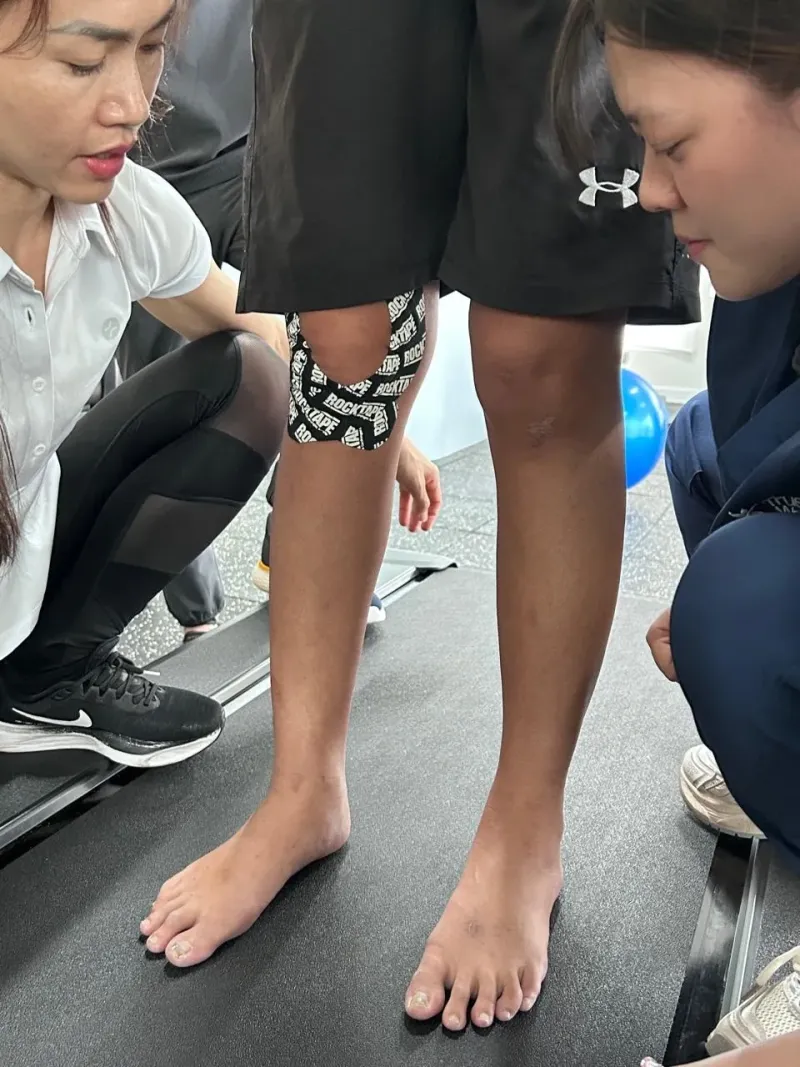
- Sports taping to support the injured area as you return to training
Functional Rehab for Hyrox Athletes
As pain settles, rehab exercises rebuild strength, mobility and control. We review your functional movements, such as squatting, lunging, hinging, pushing and pulling, so you can return to running and station work with better control under load.
When Can I Return to Training?
We clear you to return when your condition has improved and you pass functional screening tests for strength, balance and movement quality. Training then builds back up step by step, rather than jumping straight into full race-pace sessions.
What Does a Typical Care Plan Look Like?
A typical plan is 3 to 4 visits per week for 12 visits, followed by a reassessment. More severe injuries may need a longer plan.
When We Refer You to a Specialist
If progress is limited after several visits, or the examination or imaging shows a severe injury, we refer you for further assessment, injections such as PRP, or a surgical consultation within our network of trusted hospitals.
Support for Healthy Hyrox Athletes
You do not need to be injured to benefit from a visit. For athletes in a training block, we offer:
- Gait and shoe analysis, using AI-assisted gait analysis to see how you run and whether your shoes suit your feet and training
- Maintenance adjustments to help keep your joints moving well as training volume rises
 Related serviceSports injury rehabFrom running and pickleball to Hyrox: recover and return to play safely.
How to Reduce Your Risk of Hyrox Injury
- Build up slowly. Increase running and station volume gradually from week to week
- Warm up before every session (khởi động) and stretch afterwards
- Plan recovery periods, including easier days and weeks, between hard training blocks
- Support your training with nutrition and hydration, especially in Ho Chi Minh City's heat

Medical Director of True Core Wellness Chiropractic Clinic. Updated 10/2026. View profile
This page is for general information and does not replace an individual medical examination.