Most headaches are not dangerous, but some are. Call 115 or go to a hospital emergency department straight away if you have:
- A sudden, severe headache that feels like "the worst headache of my life"
- A new type of headache that is different from any you have had before
- Headache with fever and a stiff neck
- Headache with weakness, numbness, confusion, slurred speech or vision loss
- Headache after a head injury
If any of these appear during your care with us, we refer you straight away for urgent medical assessment.
At True Core Wellness in District 7, most of the headache patients we see are office workers who spend long hours sitting at a computer or looking at a phone, often under stress and with poor sleep. Women are slightly more affected than men. This page explains the common types of headache, the warning signs that need urgent care, and how we assess and treat headaches.
Common Types of Headache We See
Tension-type headache (đau đầu căng cơ) is the most common. It usually feels like a dull, tight band or pressure around the forehead, temples or back of the head, and often comes with tight neck and shoulder muscles.
Cervicogenic headache (đau đầu do cột sống cổ) starts in the neck. Pain often begins at the base of the skull (đau đầu sau gáy) and spreads toward the eye or forehead, usually on one side. It is often worse with certain neck movements or after long periods at a desk.
Migraine (đau nửa đầu) is a throbbing headache, often on one side, that may come with nausea and sensitivity to light or sound. For migraine, our care focuses on neck and muscle tension that can act as a trigger, alongside any medical care from your doctor.
Common Triggers
- Long hours sitting at a computer with the head pushed forward
- Frequent phone use, looking down for long periods
- Stress and tight shoulder and neck muscles (đau cổ vai gáy)
- Poor sleep, or sleeping in an awkward neck position
- Skipping meals and not drinking enough water
Your First Visit: Consultation and Examination
Headaches have many causes, so the first visit starts with a detailed history. The doctor asks when your headaches started, where you feel them, how often they come, what triggers or eases them, and how they affect your work and sleep.
Next is a thorough examination that includes:
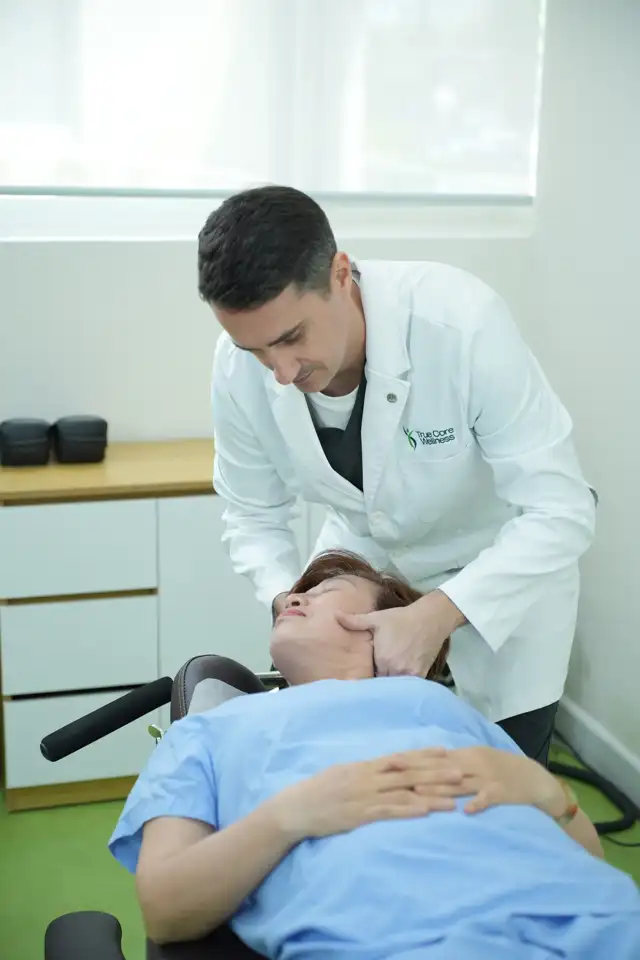
- A detailed neck examination of movement, joints and tender areas
- A myofascial examination of the muscles around the head, neck and shoulders
- A neurological examination, including the cranial nerves
- A posture assessment
- Screening of the blood vessels in the neck (vertebrobasilar screening) before any neck treatment, as an important safety step
This shows us what type of headache you are likely dealing with, whether the neck is involved, and whether you need a referral before any treatment begins. Depending on the findings, treatment may begin on the same day.
Headache Treatment at True Core Wellness
The doctor combines treatments based on your type of headache and examination findings. These may include:
- Chiropractic care (nắn chỉnh cột sống cổ) to improve movement in stiff neck and upper back joints
- Acupuncture (châm cứu) to help ease muscle tension and pain
- Soft tissue therapy for tight muscles in the neck, shoulders and base of the skull
- Laser therapy to help decrease inflammation and increase circulation
- Strengthening exercises for the deep neck and upper back muscles that support good posture
Ergonomic Advice for Work and Home
Because so many headaches are linked to desk work and phone use, we give practical advice on your workstation, screen height, chair position, phone habits and sleeping position, so the improvements made in the clinic last.
What Does a Typical Care Plan Look Like?
A typical plan is 3 to 4 visits per week for 12 visits, followed by a reassessment. After that, we recommend maintenance care to help keep neck and muscle tension under control, especially if your work keeps you at a desk.
When We Refer You to a Specialist
If your headaches show any warning signs, or do not follow a pattern that fits neck- or muscle-related headache, we refer you to a neurologist or other specialist for further assessment.
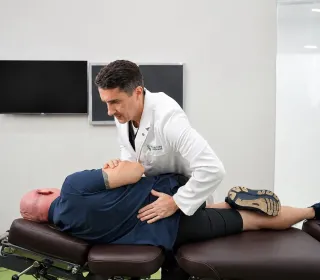 Related serviceChiropractic careJoint adjustments that ease nerve pressure and restore range of motion.
Daily Habits That Help Reduce Headaches
- Set your screen at eye level and keep your head over your shoulders
- Take a short movement break every 30 to 45 minutes at the desk
- Hold your phone higher instead of looking down for long periods
- Use a pillow that keeps your neck level while you sleep
- Drink enough water, eat regular meals and make time to manage stress

Medical Director of True Core Wellness Chiropractic Clinic. Updated 10/2026. View profile
This page is for general information and does not replace an individual medical examination.