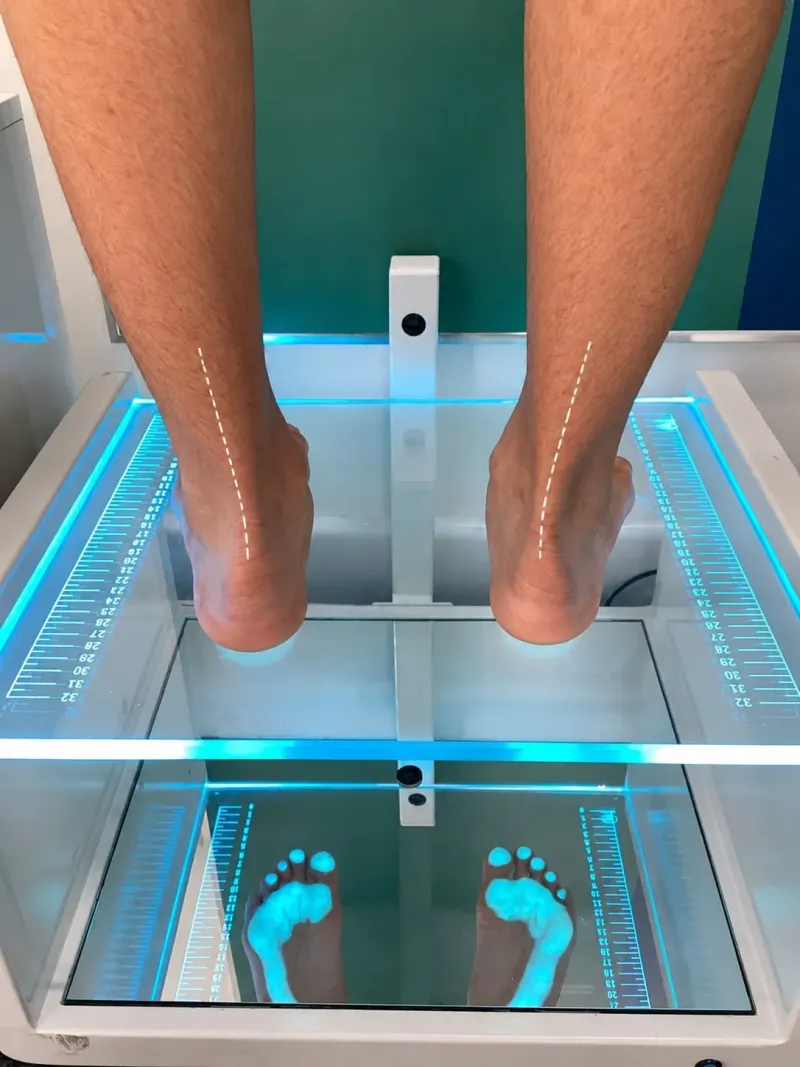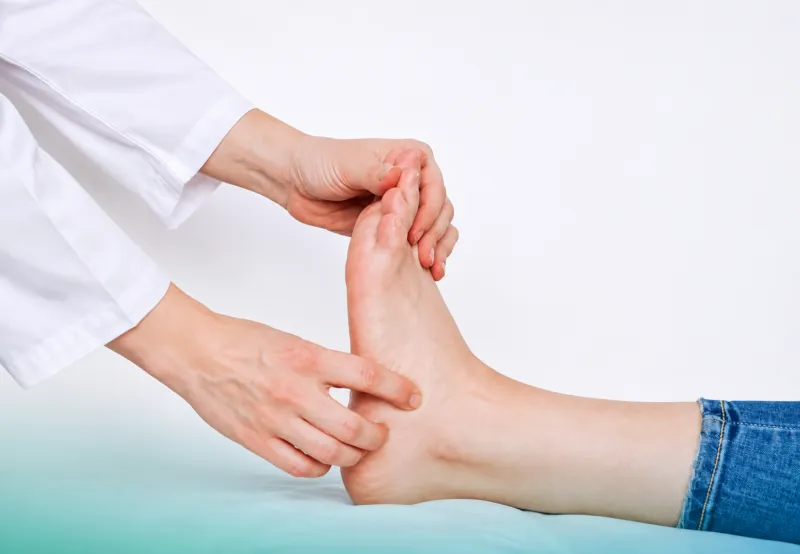
- Flexible flat feet: the arch shows when sitting or on tiptoe and drops when standing. This is the common type in children.
- A child who walks, runs and plays normally without pain usually needs no treatment.
- Parents can film their child walking in slow motion from behind to watch the ankles, knees and shoulders.
- A low arch is not enough to say a child has scoliosis; uneven shoulders or an asymmetric trunk need their own examination.
When they notice their child walking with the feet turned out, the knees coming together or the shoulders looking uneven, many parents start paying closer attention to how their child walks. These signs can appear together with flat feet or an asymmetric posture. Looking at the feet while the child stands and while they sit is the first step in seeing how the arch changes under load.
Dr. Wade Brackenbury, a chiropractor with around 35 years of experience in foot orthotics, began examining and treating flat feet in children while working in Malaysia. He says he sees several hundred cases of flexible flat feet every year. During an examination he looks at the arch under load and watches how the ankles, knees and trunk move with each step.
What are flat feet?
Flat feet are a condition in which the long arch on the inside of the foot is low or hard to see. In the type common in children, the arch is clearly visible when the child sits or stands on tiptoe, then drops when they stand and put their body weight on the foot. This is called flexible flat feet.
When he moved to Malaysia around 35 years ago, Dr. Wade noticed he was seeing more children with low arches than during his years in the United States. Some children walked barefoot with their feet turned out and their knees pointing inward or touching. These observations led him to look at gait and whole-body posture when assessing flat feet in children.
“The feet are the foundation of the body.” — Dr. Wade Brackenbury
Are flat feet congenital or inherited?
Many young children have low arches in their first years. The arch can become more visible as they grow. Family history is also taken into account during the examination. For each child, the doctor therefore looks at the flexibility of the foot, the symptoms and how the child moves, not only at the shape of the arch.
Dr. Wade says that when he first worked in Southeast Asia, he thought genetics might explain the difference he was seeing. Later, when he met children of Vietnamese, Chinese and Thai origin living in the United States whose arches differed from those of their relatives in Southeast Asia, he began to question the role of the environment. He suggests epigenetics may play a part and points to differences in diet, footwear habits and walking surfaces. This is a hypothesis based on his own observations.
The folk belief that “flat feet bring good fortune”
Dr. Wade heard a similar belief while studying acupuncture in China. He recalls paintings of royal children and the contrast between the smooth floors of a palace and the dirt and stone paths of ordinary homes. It made him wonder whether walking surfaces might be linked to the shape of the feet. The story shows how folk wisdom explains a physical trait.
How are flat feet linked to the knees and spine?
When the arch drops under body weight, the heel and ankle can look as if they are rolling inward, while the front of the foot may point outward. As Dr. Wade watches a person walk, what matters is how the knees and trunk adjust to keep balance. Some people walk with their knees turning inward; others turn their feet out more. Picture knees that come together in an X shape, or feet that point outward in a V shape.
In practice, Dr. Wade says he often sees adults with very low arches who come in for knee pain. Some also report back, shoulder or neck pain. These symptoms need to be assessed case by case to find the cause.
An uneven stance and scoliosis need their own assessment. A low arch or an ankle rolling inward is not enough to conclude that a child has scoliosis, or to explain the cause of a curve. If you see one shoulder higher than the other, one shoulder blade sticking out or an asymmetric trunk, take your child for a spinal examination.
How to check for flat feet in your child at home
Dr. Wade suggests watching your child from behind, both when they stand naturally and when they walk barefoot. You can use the slow-motion mode on your phone to replay a few steps and look for the following:
- Do the feet and ankles tilt inward under load? Do the feet point clearly outward when walking?
- Do the knees turn inward, touch or form an X shape?
- Are the shoulders and trunk clearly uneven when standing or walking?
- Does the arch show more clearly when the child sits or stands on tiptoe?
The video can help you show the doctor exactly what you noticed. Book an examination if your child’s feet hurt or are stiff, if the two sides look clearly different, or if your child has trouble running, jumping or taking part in everyday activities.
Is an X-ray needed for suspected flat feet or scoliosis?
For typical flexible flat feet, an examination is usually enough. The examiner can watch the arch while the child sits, stands, rises on tiptoe and walks. If the foot is stiff, painful or shows unusual signs, a weight-bearing X-ray of the foot may be ordered depending on the case.
If scoliosis is suspected after the examination, the doctor may order a standing X-ray of the whole spine to assess and measure the curve.
Two types of flat feet and how they are managed
Flexible flat feet
The arch appears when the foot is lifted, when sitting or on tiptoe, and drops when standing under load. This is the type Dr. Wade sees more often in practice. In a child who walks, runs and plays normally without pain, it usually needs no treatment. If the child has pain or tired legs, foot orthotics may be considered for support and comfort. Exercises may be prescribed depending on the examination, for example when the Achilles tendon is tight. Current evidence does not show that orthotics create a lasting arch in children.
Rigid flat feet
The arch stays low or hard to see even when the foot is not bearing weight or when the child stands on tiptoe. Dr. Wade says he sees this type much less often. When rigid flat feet are suspected, the patient should see an orthopaedic specialist to find the cause. Depending on the case, orthotics may be used for support and comfort. Whether surgery is needed depends on the cause, the level of pain and the effect on movement.
 Related servicePosture, flat feet & scoliosis in childrenEarly detection and follow-up through every stage of growth.
When should arches be assessed in children and adults?
In young children, Dr. Wade pays attention to the ages of 3 to 7, when the arch is still developing and the walking pattern changes with age. Many children have low arches at this stage but still move normally. Whether to monitor or intervene depends on the flexibility of the foot, the symptoms and how much it affects each child’s daily life.
In adults, an arch that used to be normal can also drop over time. Dr. Wade describes people who first notice a clearly collapsing arch in their 50s or 60s, sometimes with pain when standing or walking. He also mentions pregnant women who notice their feet changing as they gain weight. When the arch drops, with pain or more difficulty walking, an examination helps find the cause and consider suitable support, including orthotics.
If you notice your child walking differently, or you find your own arch dropping with pain when standing and walking, you can book an examination at True Core Wellness Chiropractic Clinic to have your arches assessed under load and your gait analysed.

Flat feet & custom orthotics. View profile