




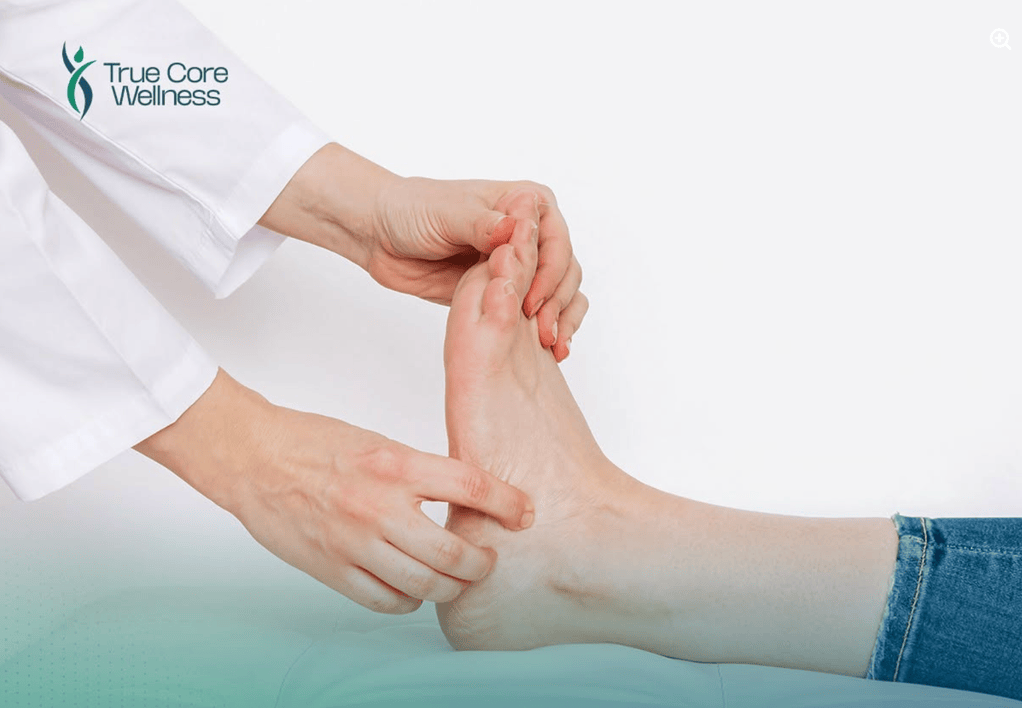
Flat feet means the arch on the inside of the foot is low or collapses when you stand, so more of the sole touches the ground. It's common in young children, whose arches are still developing, and can also develop or worsen in adults due to age, weight changes, pregnancy, or injury.
How Flat Feet Leads to Overpronation?
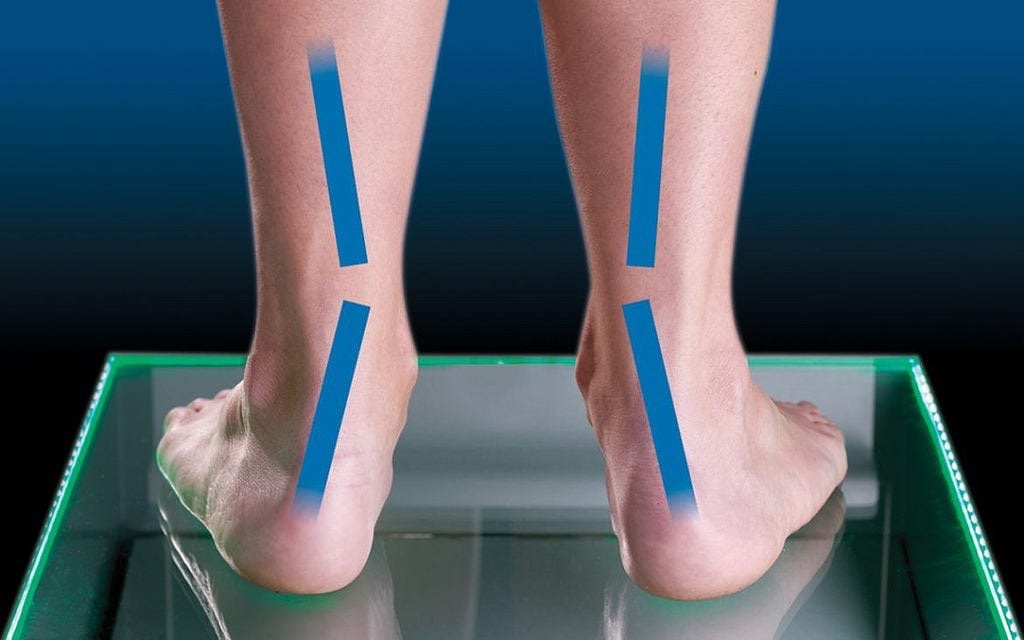
Every foot pronates — it's the normal inward roll that happens as the foot absorbs shock with each step. Flat feet make it easy for that roll to go too far, a pattern called overpronation, where the arch collapses more than it should and the foot rolls too far inward with every stride.
Why Overpronation Is Bad for the Whole Chain?
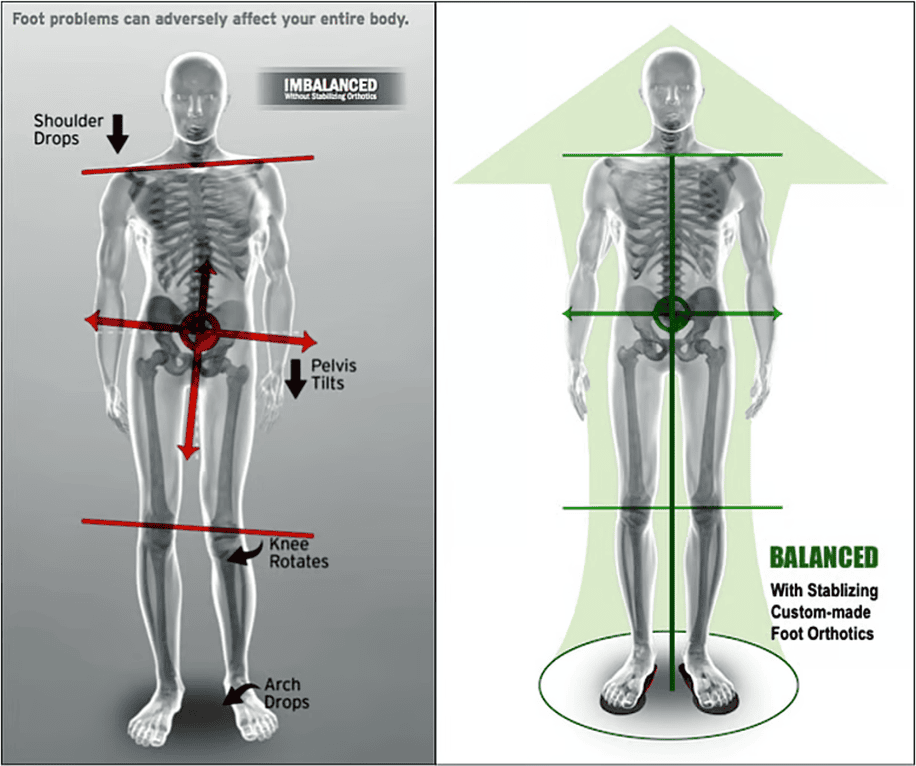
The bones of the leg are connected, so overpronation doesn't stay in the foot. An overpronated foot pulls the shin bone inward, which changes how the knee tracks and how the hip and pelvis sit. Over time, this chain reaction is a common contributor to foot, ankle, knee, hip, and even lower back pain — the foot is often the root cause of pain showing up much higher in the body.
How Orthotics Help?
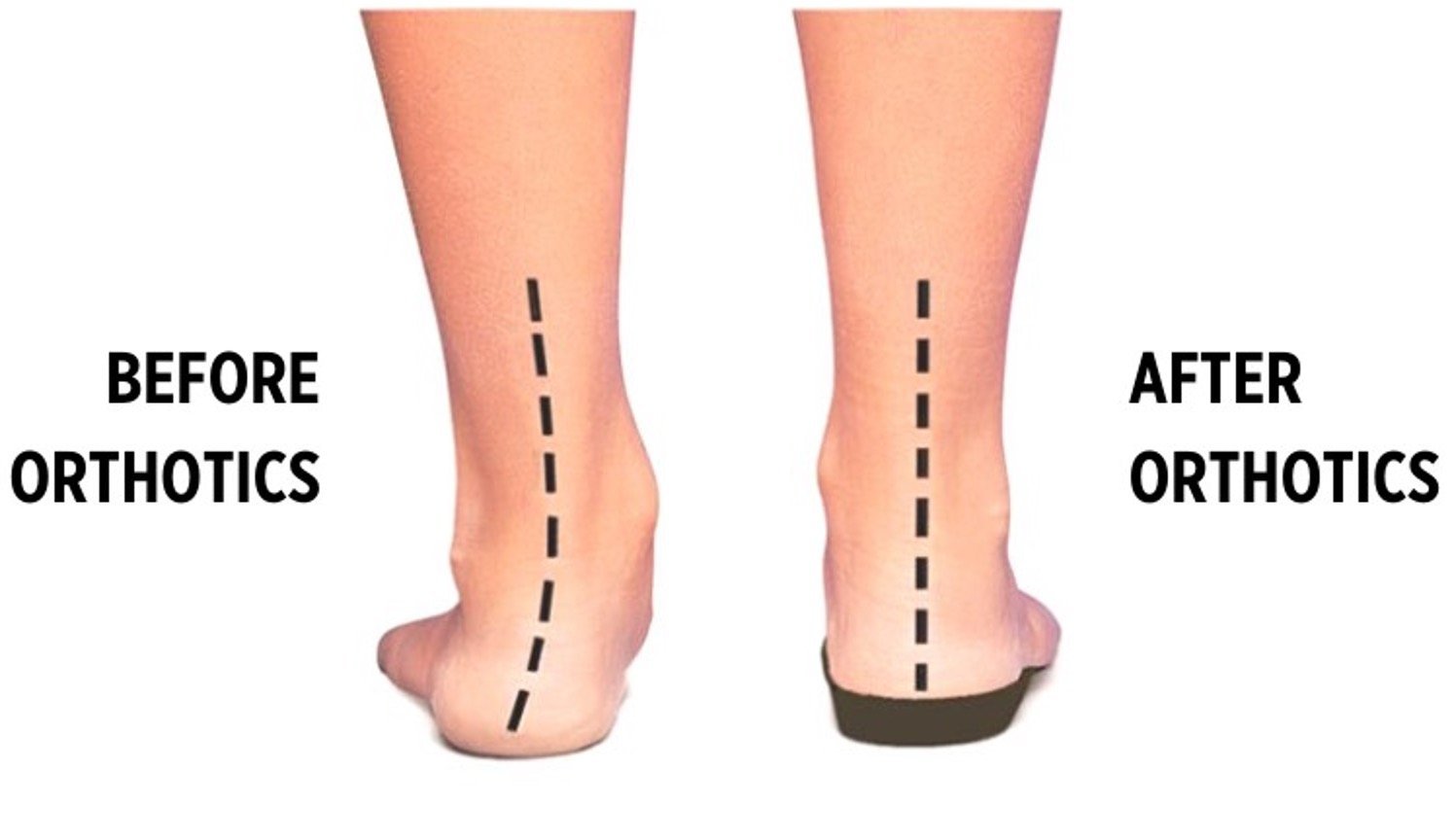
Custom orthotics do more than support the arch. They control excessive pronation, improving the alignment of the foot, ankle, knee, and hip. This reduces abnormal stress throughout the body, improves walking mechanics, and often relieves pain in the feet, knees, hips, and lower back.
How Foot Rehab Exercises Help?
Orthotics improve alignment, while exercise builds the strength to maintain it. Strengthening the foot, ankle, hip, and core muscles improves stability and helps make the results more effective and longer lasting.
Together, orthotics and exercise provide the best long-term outcomes for most people with flat feet and overpronation.
What To Do Next?
If your child has flat feet — especially with visible overpronation, frequent trips or falls, or complaints of foot or leg pain — it's worth having their alignment evaluated while their feet are still developing.
If you're an adult experiencing foot, ankle, knee, or hip pain, flat feet and overpronation could be part of the cause. A proper evaluation can tell you whether correcting your alignment would help.
Our team at True Core Wellness is happy to assess your feet and put together a plan built around your specific alignment. Contact us to get started.