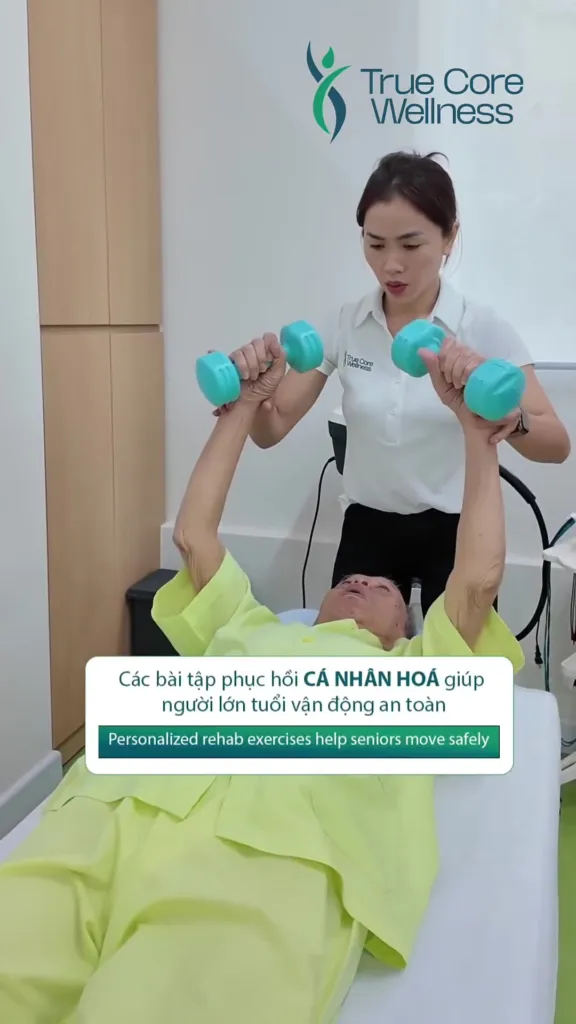
Rehabilitation for older adults should aim for practical changes in daily life, combining suitable exercise, good nutrition and the support of family.
From struggling to move to 60-minute rehab sessions
Mr. Luong had COVID and spent a week in hospital. After the illness, he found it hard to keep his neck upright when sitting, and his head often dropped forward. Advanced age, little activity and weak muscles meant that moving around and daily tasks took much more effort.
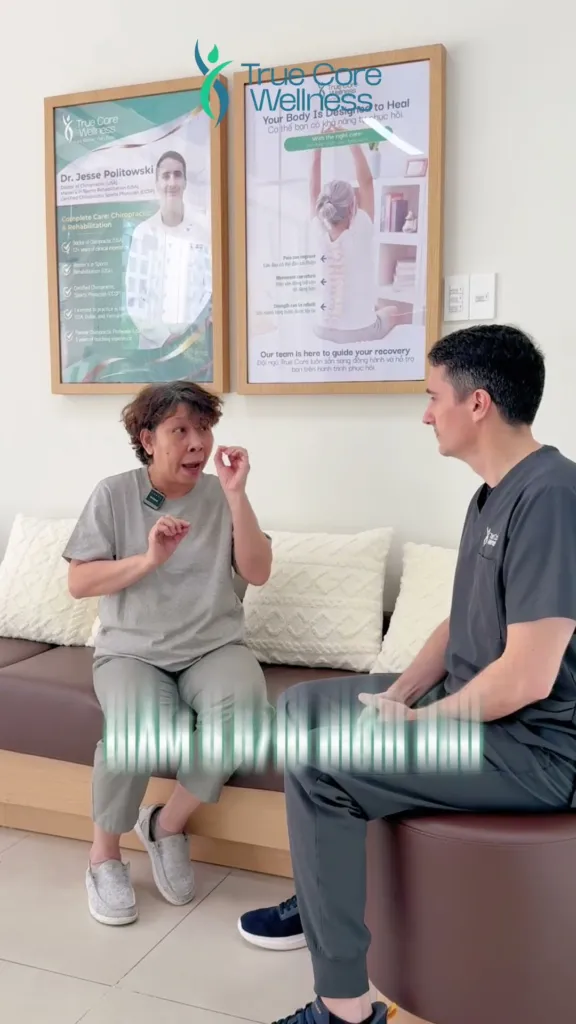
At True Core Wellness, Dr. Jesse Politowski, a chiropractor, assessed his mobility, the difficulty he had holding his head up, and how he responded to exercise.
Based on this, a rehabilitation programme was chosen to suit his condition, focusing on stretching and muscle strengthening, with the aim of helping him move and grip better.
As his progress was shared, after one week of treatment he could hold his neck upright again when sitting. Over the following sessions he gradually gained strength and took part in rehab sessions lasting up to 60 minutes each. He has kept up 5–6 sessions a week with a positive spirit and steadily improving mobility.
This is the result of one individual case, assessed and closely followed by Dr. Jesse at every session. The length of a rehabilitation session does not mean continuous or high-intensity exercise, and each person responds differently.
What does a rehab session at True Core Wellness – Chiropractic Clinic include?
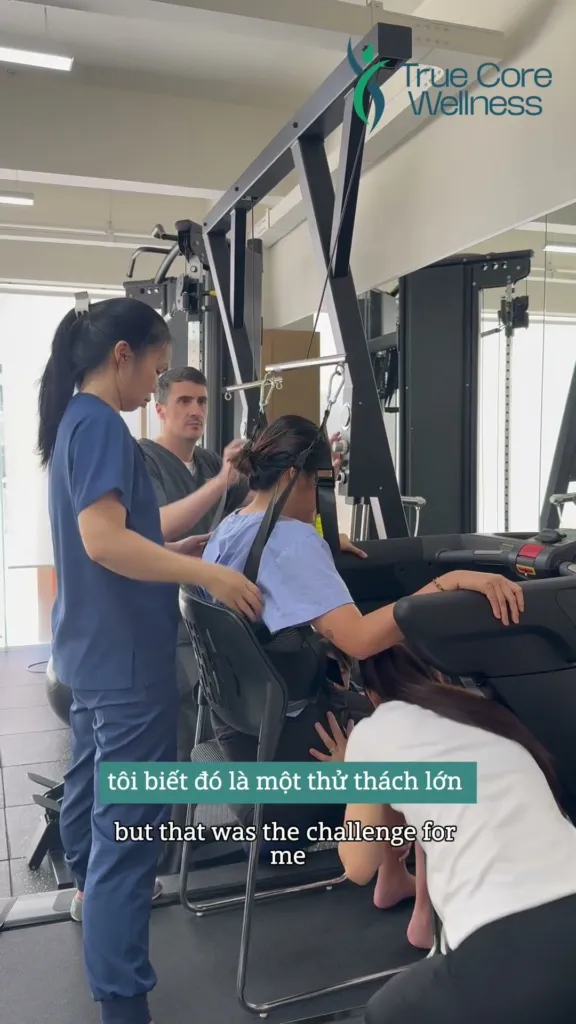
Throughout Mr. Luong’s journey, activities were combined according to professional assessment and what he was able to do in each session.
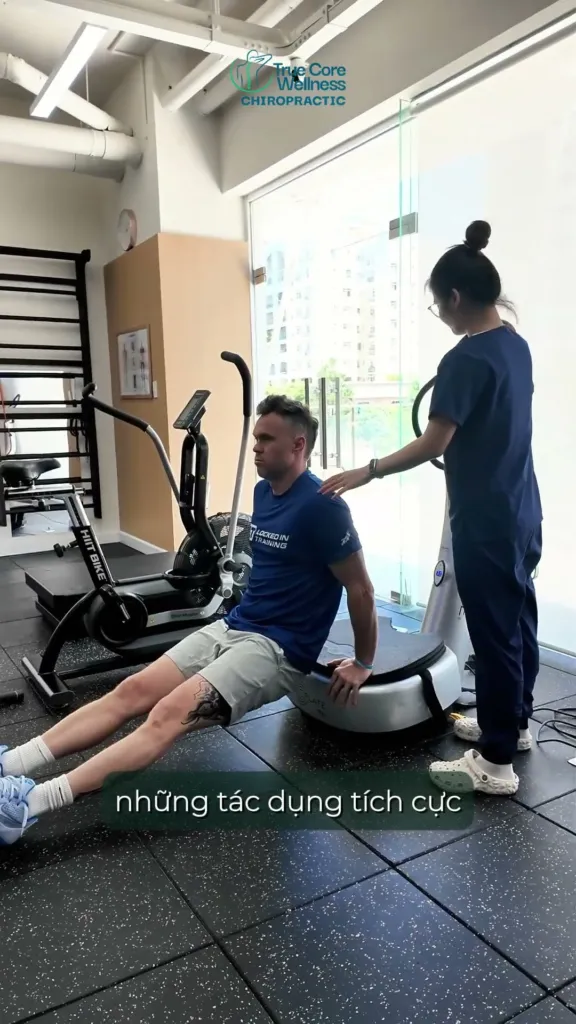
Supporting therapies
At True Core Wellness, rehabilitation sessions use laser therapy and massage equipment to help manage discomfort and relax the muscles before or during rehabilitation.
Whether each therapy is indicated, its settings and how suitable it is must be carefully assessed by a doctor. It should not be assumed that every older adult needs them or will get the same result.
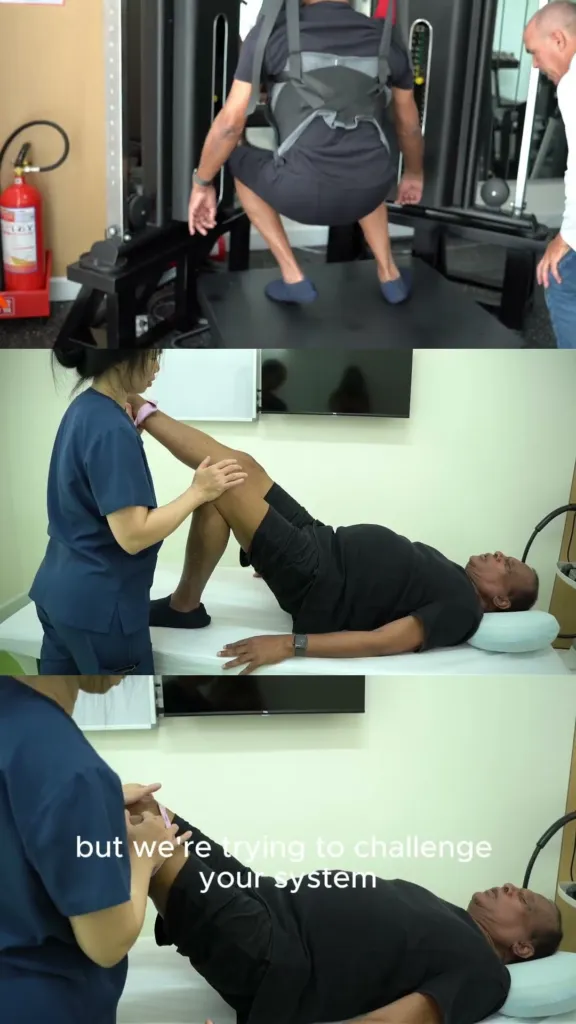
Personalised rehabilitation exercises
Mr. Luong’s exercises were chosen to support flexibility, muscle strength and the movements he needs in daily life. Goals should be tied to real needs: sitting more steadily, standing up more easily, or using the hands more freely. Small daily progress means a great deal for older adults.
Balance training
Balance activities are adjusted to his ability, with someone to assist when needed. The WHO recommends that older adults combine exercises focused on balance and strength to improve physical function and help prevent falls.
How should older adults exercise?
The recommendations below are drawn from the WHO and institutes of the US National Institutes of Health (NIH), for older adults to discuss with their doctor before making a personal plan.
- Start from current ability. People recently discharged from hospital, with weak muscles or with underlying conditions should be assessed to choose suitable exercises and the right level of support. Activity can be split into several short periods and increased gradually as the body responds well.
- Combine different types of activity. Walking at a suitable pace, strength training, flexibility work and balance training each look after a different side of physical function. Movements such as standing up, sitting down or lifting the arms and legs should be chosen according to what can be done safely.
- Don’t take someone else’s duration as your target. The WHO’s general recommendation is for older adults to aim for 150–300 minutes of moderate-intensity aerobic activity a week. However, people with health limitations should be as active as their abilities and condition allow. This figure is not a starting requirement for everyone, especially for the very old or those recovering from illness.
- Watch for warning signs. Stop exercising if pain, dizziness or shortness of breath appears, and tell a health professional so it can be assessed.
Nutrition to help older adults stay healthy
Nutrition deserves as much attention as exercise. Suitable meals provide the energy and nutrients needed to keep up daily activities.
Include protein-rich foods
Protein plays a role in maintaining muscle. Older adults should choose a variety of protein sources such as fish, eggs, meat, milk, tofu and beans, spread across their meals. Exact portions should be adjusted to their health and professional advice.
Eat a varied diet and look after bone health
Meals should include vegetables, fruit, whole grains and protein-rich foods. Milk or alternatives fortified with calcium and vitamin D can help meet the nutritional needs of bones. Choices should suit each person’s tolerance and diet.
Drink water regularly through the day
The feeling of thirst can weaken with age. Families should help older relatives drink water regularly and talk to the doctor about the right fluid intake when there are specific treatment requirements.
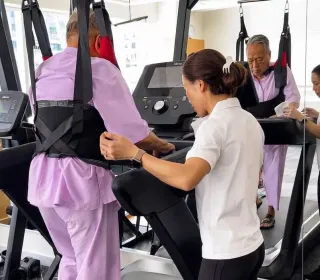 Related serviceMobility & fall preventionBuild strength, balance and confidence on your feet.
Being there so every step forward counts
For Mr. Luong, holding his neck upright when sitting and having more strength for rehabilitation are steps forward tied to everyday life. Family members can support him by bringing him to follow-up visits, helping with the exercises he has been shown, and noticing the changes in his daily routine.
In the spirit of “Three Generations – One Clinic”, True Core Wellness aims to provide care that fits the needs of every generation. Whatever one’s age, the wish to do familiar things on one’s own, stay independent and enjoy time with family deserves to be heard.
If your parents or grandparents are growing frail or finding it hard to move, book an assessment to discuss a care plan that suits them.

Spine & sports injuries. View profile
This story reflects one patient’s own experience; results differ from person to person. It does not replace an examination by a doctor.